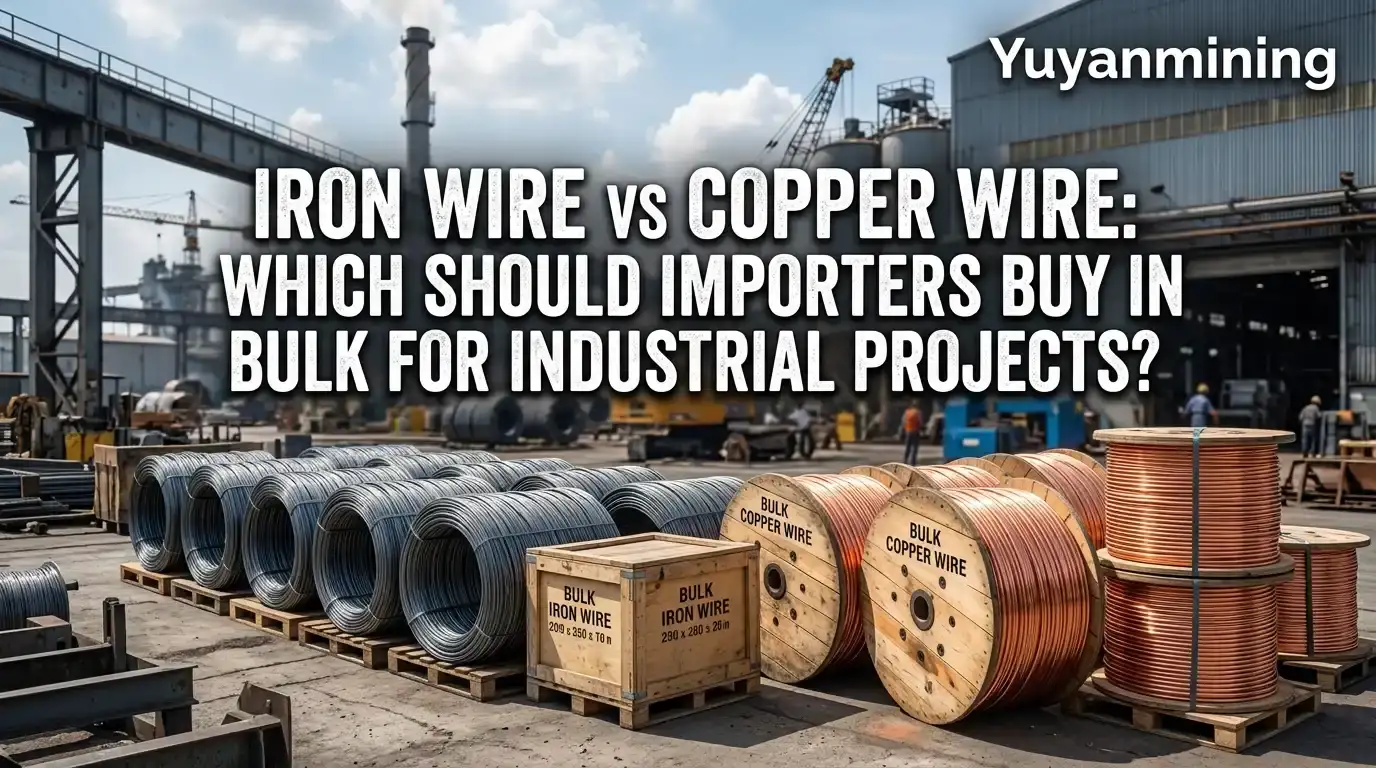
Choosing between iron wire and copper wire is one of the first decisions a B2B buyer faces when sourcing industrial wire in bulk. The two materials can look similar on a purchase order, but they behave very differently in the field. The wrong choice can lead to failed inspections, rusted stock in a warehouse, or a project that runs over budget. This guide from Yuyanmining compares both materials clearly so importers can decide with confidence.
In short, copper wire is the better choice when electrical conductivity matters, while iron wire wins on tensile strength, cost per ton, and structural use. Most importers end up buying both, so the real question is which material fits each project. This article covers properties, costs, applications, supplier checks, and a simple decision framework built for wholesale buyers sourcing industrial wire in 2026.
Copper wire is the right pick for electrical and power applications because it conducts electricity far better than iron and handles heat well. Iron wire is the right pick for binding, fencing, construction, and reinforcement because it has higher tensile strength and costs much less per ton. The table below summarizes the main differences so buyers can compare both materials in a few seconds.
Use this table as a starting point rather than a final answer. Actual performance depends on the wire grade, coating, gauge, and the environment where the wire will be installed. A galvanized iron wire behaves very differently from black annealed wire, so always confirm specifications and request test reports from your supplier before placing a bulk order.
Iron wire is a drawn metal wire made mainly from low carbon steel or iron rod, produced by pulling the material through a series of dies until it reaches the target diameter. It is valued for strong tensile performance, flexibility, and low cost. Importers buy it in coils, spools, and bundles for construction, agriculture, packaging, and general industrial use across many global markets.
The most common type is galvanized iron wire, which carries a zinc coating that protects against rust and suits outdoor use. Black annealed wire is softer and easier to bend, so it is popular for tying rebar on construction sites. Spring grade and high carbon wire offer extra strength for demanding mechanical jobs, while PVC-coated iron wire adds weather protection and color options for fencing and decorative work.
Iron wire offers strong tensile strength, wide availability, and a low price per ton, which makes it attractive for high-volume orders. Its main weakness is corrosion, since uncoated wire rusts quickly in humid or coastal conditions. It also conducts electricity poorly, so it should never replace copper in electrical systems. Buyers should check coating weight and storage conditions before ordering, and can browse our Iron Wire range for available specifications.
Copper wire is a conductor made from high-purity copper, usually 99.9% or higher, drawn into solid or stranded forms. It is the global standard for electrical applications because it carries current efficiently with minimal energy loss. Importers source it for power distribution, industrial machinery, electronics, motors, transformers, and control systems where stable conductivity and long service life are essential.
Bare copper wire is used for grounding and general conduction, while tinned copper adds a thin tin layer that improves corrosion resistance in marine and humid settings. Enameled copper wire, also called magnet wire, is coated with insulating varnish for coils and motors. Solid conductors suit fixed installations, while stranded conductors offer flexibility for moving equipment. Insulated copper wire combines the conductor with a protective jacket for safe installation.
Copper wire delivers excellent conductivity, good thermal performance, and strong resistance to corrosion, which together support long service life in electrical systems. The trade-offs are higher cost, heavier weight, and price swings tied to global metal markets. Because of these factors, importers should lock in quotes carefully and verify purity levels.
Read this article: Complete Copper Wire Buying Guide for B2B Buyers and Importers
For wholesale buyers, a material comparison only matters when it connects to purchasing outcomes. The five areas are conductivity, strength, corrosion resistance, weight, and cost. These often decide whether a bulk order performs as expected. Understanding each one helps importers match the material to the project and avoid expensive corrections after goods have already shipped.
Copper has about six to ten times the electrical conductivity of iron, depending on the iron grade. That gap means an iron conductor must be much thicker to carry the same current, and it still generates more heat and energy loss. For any application involving power transmission, motors, or signal wiring, copper is the practical and safer choice. Iron wire should be reserved for non-electrical work.
Iron wire is generally stronger in tension than annealed copper, which is why it dominates fencing, binding, anchoring, and reinforcement. Copper is softer and stretches more under load, so it is poorly suited to carrying weight or holding structures together. When a project needs a wire to hold, tie, or support something, iron or steel wire is usually the better value and the more reliable option.
Copper naturally forms a stable surface layer that slows further corrosion, so it performs well in humid, indoor, and many outdoor environments. Iron wire rusts unless it is galvanized, coated, or stored carefully. Zinc coating can extend outdoor life by many years, but the coating weight matters. Importers shipping by sea should also consider moisture exposure during transit, since rust can damage uncoated coils before they arrive.
Copper is about 14% denser than iron, so a coil of the same dimensions weighs more. In practice, the bigger shipping difference comes from value. Copper cargo is far more valuable per ton, which raises insurance costs and theft risk, while iron wire ships as a lower-value commodity. Both materials are heavy, so container weight limits and palletizing standards should be confirmed with the supplier early.
Copper prices follow global exchanges such as the LME and COMEX, so quotes can change within days. Iron wire pricing tracks steel rod and raw material costs, which are usually steadier and far lower per ton. Importers buying copper should ask for short quote validity windows and consider fixed price agreements. Iron wire buyers can often plan larger forward orders with less exposure to sudden market movement.
The best material is the one that matches the real job, not the one with the best headline specification. Industrial projects fall into three broad groups: electrical, structural, and safety-critical. Mapping your order to one of these groups before requesting quotes saves time, reduces sample rounds, and helps suppliers recommend the right wire grade immediately.
Choose copper wire when the application involves carrying electricity, transferring signals, or winding coils. This includes power distribution, motors, transformers, control panels, grounding systems, and electronic equipment. Copper is also the safer choice where heat buildup or energy loss would create problems. If the wire will be part of a live circuit, copper should be the default material in almost every case.
Choose iron wire when strength, low cost, and volume matter more than conductivity. Typical uses include construction binding, fencing, agricultural support, packaging, mesh production, and structural reinforcement. Galvanized iron wire suits outdoor projects, while black annealed wire fits indoor binding and tying. For importers serving construction and hardware distributors, iron wire is often the higher volume product in the catalog.
Some environments need more than a bare conductor. Chemical plants, mines, fuel storage areas, and other hazardous sites require wiring that prevents sparks and withstands harsh conditions. In these cases, buyers should look at certified products rather than general-purpose wire. Explore our Explosion Proof Wire and Insulated Wire categories.
Read this blog: Complete Guide to Industrial Wires: Insulated, Copper, Iron, and Explosion-Proof
A low price per ton can hide expensive problems. Total landed cost includes the base material price, packaging, inland transport, ocean freight, insurance, import duties, taxes, and any rework caused by quality issues. Importers who compare quotes on unit price alone often discover later that the cheapest supplier delivered the most expensive shipment once all these factors were added together.
Minimum order quantities also differ between materials. Iron wire suppliers often accept larger tonnage orders at lower margins, while copper suppliers may set MOQs based on production runs and current metal prices. Packaging choices, such as spool type, moisture barrier wrapping, and pallet strength, affect both freight efficiency and product condition on arrival, so they should be negotiated alongside the price.
The cheapest option per ton is not always the cheapest per project. A thinner, lower grade wire might fail early and require replacement, while a correctly specified wire may last years longer. When comparing quotes, calculate cost per meter of usable, compliant wire and include the expected service life. This approach gives procurement teams a more honest picture of the true investment.
A reliable supplier does more than quote a good price. The best partners provide consistent quality, clear documentation, and responsive communication from sample stage to final shipment. For importers sourcing from China, supplier verification is especially important because factory capabilities vary widely. A structured evaluation reduces risk and builds a stable, repeatable sourcing relationship over time.
Use the checklist below when shortlisting wire manufacturers and trading partners:
• Production capacity, lead times, and on-time delivery history
• Customization options for gauge, coating, packaging, and labeling
• Sample policy and an in-house quality control process
• Export experience, shipping documentation, and after-sales support
Once you have a shortlist, request samples and compare them against the agreed specification. If you are new to sourcing from China, the How to Import Industrial Wire from China: Step-by-Step Guide for B2B Buyers walks through quoting, inspection, shipping, and customs in detail.
Most bulk wire problems come from preventable mistakes made before the order is placed. Reviewing them in advance helps procurement teams protect budgets and delivery schedules. The most frequent errors are listed below, and each one can be avoided with a clear specification sheet and a disciplined approval process.
• Choosing a supplier on price alone
• Ignoring gauge, tolerance, and coating specifications
• Skipping sample testing before mass production
• Overlooking packaging and moisture protection for sea freight
• Failing to verify copper purity or zinc coating thickness
When the choice is not obvious, a simple five-step process helps buyers reach a confident decision. It works for first-time importers and experienced procurement managers alike, and it keeps the conversation with suppliers focused on facts instead of assumptions. Follow the steps in order and document each answer.
1. Define the application and the performance requirements
2. Set the budget and the order volume
3. Check environmental conditions such as humidity, heat, and chemical exposure
4. Confirm compliance requirements in the destination market
5. Request samples and quotes from shortlisted suppliers
If the answers point to electrical use, move toward copper or insulated wire. If they point to strength, binding, or structural use, move toward iron wire. For mixed projects, split the order by function and source both materials from the same supplier where possible, which can simplify logistics, reduce freight costs, and strengthen your negotiating position.
Copper wire is better for electrical applications because it conducts electricity far more efficiently and resists corrosion well. Iron wire is better for strength-based jobs such as binding, fencing, and reinforcement.
Yes, iron wire is significantly cheaper than copper wire per ton. Copper is a more valuable metal, and its price follows global exchanges, while iron wire is made from lower-cost steel or iron rod.
In most cases, no. Iron wire has much lower conductivity, so it creates higher resistance, more heat, and greater energy loss. It also corrodes more easily without protection. Using iron wire where copper is specified can cause safety risks and fail compliance checks.
The answer depends on the purpose. For structural or binding work outdoors, galvanized iron wire is a cost-effective option because the zinc coating slows rust. For electrical use outdoors, insulated copper wire or tinned copper is safer.
Copper and insulated wire MOQs may be based on coil length, production runs, or current metal prices. The most reliable approach is to request a written quote that states MOQ, lead time, and packaging terms.
Start by requesting material certificates and test reports, then order samples and test them against your specifications. Check diameter, tolerance, coating thickness, tensile strength, and copper purity where relevant.
The core takeaway is simple. Copper wire is the right choice for conductivity and electrical reliability, while iron wire is the right choice for strength, volume, and cost efficiency. Smart importers do not treat this as a competition; they match each material to the job and buy from suppliers who can document quality. That approach protects margins and keeps customers satisfied.
If you are ready to source, explore our Insulated Wire, Iron Wire, Copper Wire, and Explosion Proof Wire categories, or contact our sales team to request a quote, samples, and a detailed specification sheet. Share your application, quantity, and destination market, and our team can recommend the right wire grade and packaging for your next bulk order.